


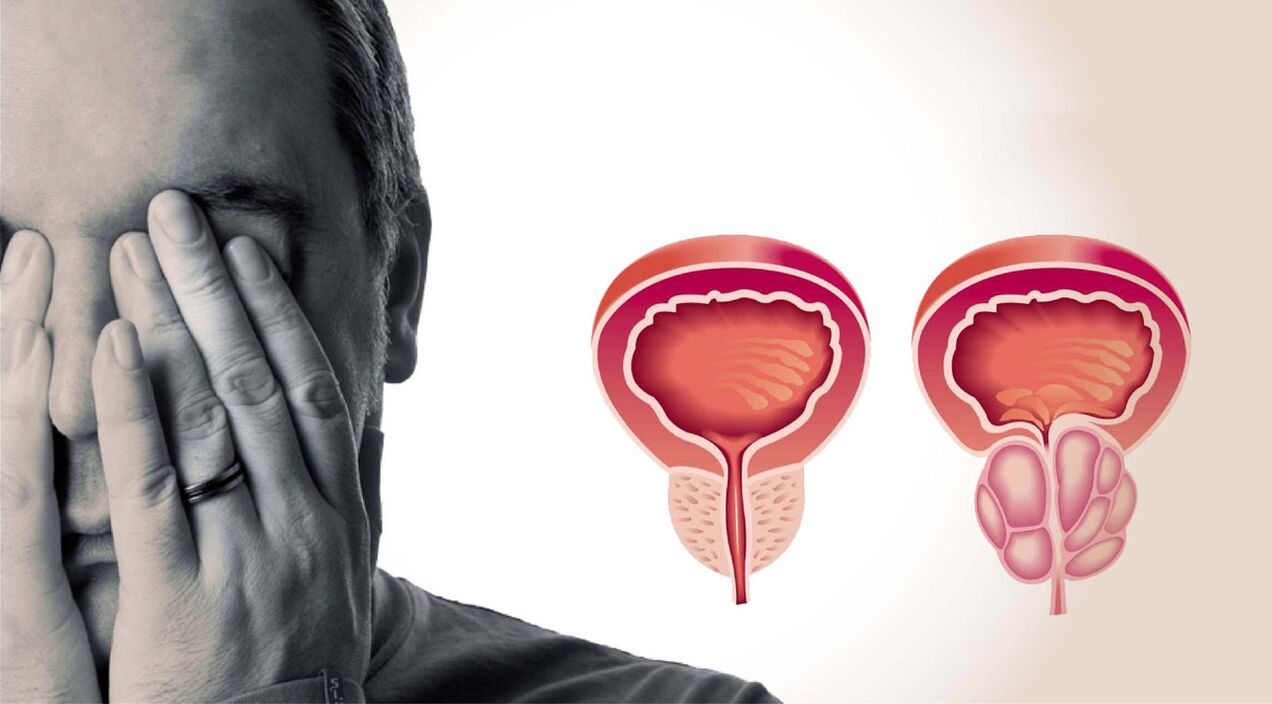
Chronic prostatitis is the most common condition encountered in the practice of urandrologists.The disease is mainly diagnosed in men who are at the peak of their reproductive, sexual activity and work abilities.Therefore, timely treatment of prostatitis is crucial to restore men's health and social functions.
Causes of chronic prostatitis
The chronic inflammatory process is followed by an acute phase caused by the activity of pathogenic microbiota.If the cause is not identified in time and comprehensive treatment is not carried out, prostatitis will turn into a latent type and relapse periodically.
Infection can occur in three ways: ascending - through the urethra, descending - when urine with pathogenic bacteria enters the bladder, hematogenous - through the circulatory system (infections are transferred from other foci of inflammation in the body).
Causes of chronic prostatitis:
- Pathogenic fungi
- E. coli
- Corynebacterium
- Gardnerella
- staphylococcus
- Trichomonas
- Klebsiella
- Mycoplasma
- Enterococci
- Neisseria gonorrhoeae
- Chlamydia
- Parasite
- Virus
- Proteus
In men with chronic prostatitis, the inflammatory process may recur even after the pathogenic microbiota has been eliminated.In this case, in the context of primary inflammation, the innervation of the organ is disrupted and the tissue is subject to autoimmune attack.Examination did not reveal any infection.Therefore, the patient was diagnosed with "non-bacterial chronic prostatitis".
Prostatic dysfunction is not always caused by infectious lesions.There are many adverse factors that induce disease.The most common of these are:
- Decreased immune defenses due to hypothermia, poor lifestyle, bad habits and overexertion.
- Chronic constipation, sedentary work, and lack of physical activity lead to poor circulation in the pelvis
- Congestion of the prostate ducts and other pelvic organs
- Chronic infectious diseases (sinusitis, sore throat)
- Permanent damage to prostate tissue due to increased perineal muscle load and physical strain
- Irregular sexual contact, sexual abstinence, interruption of sexual intercourse
- Urogenital system inflammation
- poor diet
- Past STD
Chronic bacterial prostatitis often occurs simultaneously with cystitis, urethritis, pyelonephritis, epididymitis, and orchitis.In some cases, the focus of infection is not even in the genitourinary system.This could be tonsillitis, sinusitis, bronchitis, dental caries, enteritis or pneumonia that is not being treated appropriately.
Urologists associate the development of nonbacterial chronic prostatitis with congestion of the pelvic organs.When local circulation is compromised, prostate blood vessels can fill with blood, causing edema and stagnant secretions.As a result, the prostate cannot produce the required amounts of secretions and hormones.This leads to the development of inflammatory processes in tissues.
The main symptoms of chronic prostatitis
Symptoms of the bacterial form of pathology are similar to those of any infectious process.They progress with an increase in the number of pathogenic flora and, without adequate treatment, can lead to a severe deterioration of the systemic condition.In the early stages, chronic prostatitis is asymptomatic or has mild symptoms.Therefore, most men ignore the need to contact a urologist for a check-up.
Postponing a visit to a specialist to identify the cause of prostatitis and initiate treatment can have serious consequences not only for the genitourinary system, but also for the psycho-emotional state.Many men experience potency disorders against the background of urinary disorders and progressive deterioration of their health, leading to stress, apathy, irritability, severe fatigue and loss of appetite.Additionally, failure to initiate treatment promptly results in infertility in 40% of cases.
Symptoms of chronic prostatitis that warrant contacting a urologist:
- Frequent, strong urge to urinate, weakened urinary flow
- Pain radiating to the perineum, groin, rectum, scrotum, glans, and sometimes even the sacrum
- Pain during urination (especially at the beginning and end of sexual intercourse)
- Chills, excessive sweating (typical endocrine symptoms, since the prostate is part of this system)
- Changes in the skin color of the area where the pain is felt
- Against the background of a weakened tone of the organ, a small amount of prostatic secretion is released from the urethra (during physical stress)
- Sexual dysfunction (decreased libido, erection problems, ejaculation due to decreased testosterone production by the gland)
Any of the signs listed may indicate a disorder, so men need to contact a urologist immediately to receive medical care.Also, don’t forget to visit your doctor regularly for preventive checkups, as the disease may be asymptomatic.In this case, the diagnosis is made by measuring the number of white blood cells in the prostate secretions.
Possible complications of chronic prostatitis
If left untreated, the inflammatory process can spread.This is full of related questions such as:
- epididymitis
- Orchitis
- Seminal vesiculitis
- urinary incontinence
- Formation of prostate stones and cysts
- reproductive dysfunction
- prostate adenoma
The most serious complication may be prostate cancer.
Diagnostic Methods of Chronic Prostatitis
The urologist, after performing a series of tests and instrumental studies, receives the necessary medical information to make a diagnosis and determine the cause of the pathology.During the first consultation, the doctor takes the patient's medical history, asks the man if he has any disturbing symptoms, and performs an examination.Visually determine urethra discharge, skin irritation, and rash in the external genital area.Also in this case, a digital rectal examination is required to evaluate the size, structure, and tenderness of the prostate.
Basic methods of diagnosis:
- General urine test
- Urine bacterial culture, urethral smear
- Microscopic examination of prostate secretions
- Urinary tract endoscopy
- Prostate ultrasound (transrectal)
- STD pathogen PCR detection
A prostatitis PSA test is performed to rule out adenomas and prostate cancer.In some cases, a tissue biopsy is required to confirm the diagnosis, followed by histological examination of the sample taken.If there are problems with reproductive function, men undergo sperm screening and MAR testing.
Treatment of chronic prostatitis
Neglect is difficult to correct.However, with a comprehensive treatment approach, stable and long-term remission can be achieved.To do this, it is necessary to eliminate the causes of the inflammatory process and increase the body's resistance.This effect is achieved by choosing an individualized treatment, taking into account the man's age, stage of prostatitis, status of the immune system and severity of symptoms.In extreme cases, when there is a threat of serious complications, patients may be advised to undergo surgical treatment.
Basic treatment methods for chronic prostatitis:
- taking antibiotics
- Symptomatic treatment
- use anti-inflammatory drugs
- Physical therapy to normalize circulation and relieve swelling
- Correction of diet and lifestyle
Completing comprehensive treatment for chronic prostatitis can eliminate the causes of the inflammatory process, reduce pain, and improve a man's overall health.An important part of treatment is restoring the body's protective resources.If prostatitis has a nonbacterial cause, taking an immune modulator can prevent an autoimmune attack.
Modern physical therapy for prostatitis
Physical therapy methods can provide rapid relief of many symptoms and provide steady improvement for most men.At home, it is recommended to take warm baths frequently, but the water should not be too hot.
Clinical methods of physical therapy for chronic prostatitis:
- Ultrasound therapy.Exposure to high frequency waves.
- Ultrasonic electrophoresis.Ultrasound therapy is combined with medications to treat prostatitis and is administered during surgery.
- Magnet therapy.Low frequency magnetic field therapy.
- UV exposure.Effect of shock waves on the direct causes of prostatitis: congestion and inflammatory processes.
- Dalson verified.Application of high frequency pulse current.
- Galvanized.Low frequency DC therapy.
- UHF.A method of using the effects of electric fields from capacitor plates to relieve symptoms of chronic prostatitis.
Electrophoresis gives clear results.It speeds up the delivery of drugs to affected tissues.Therefore, the burden on other organs can be reduced, which is important for overall health, since chronic prostatitis requires strict medical treatment.Shockwave therapy procedures provide positive results.After the first session, most men notice less prostate discomfort, less pain, and improved erections.
Physical therapy is an adjunct to the treatment of prostatitis.Reduction in symptom severity and overall speed of recovery depend on the body's individual response to the chosen exposure method.Some courses of treatment take weeks or even months, but can help put men with chronic prostatitis into stable remission.
Qualified urologists in modern clinics can develop the best treatment plan for this pathology.